Popular Cars Equipped with a CVT Transmission
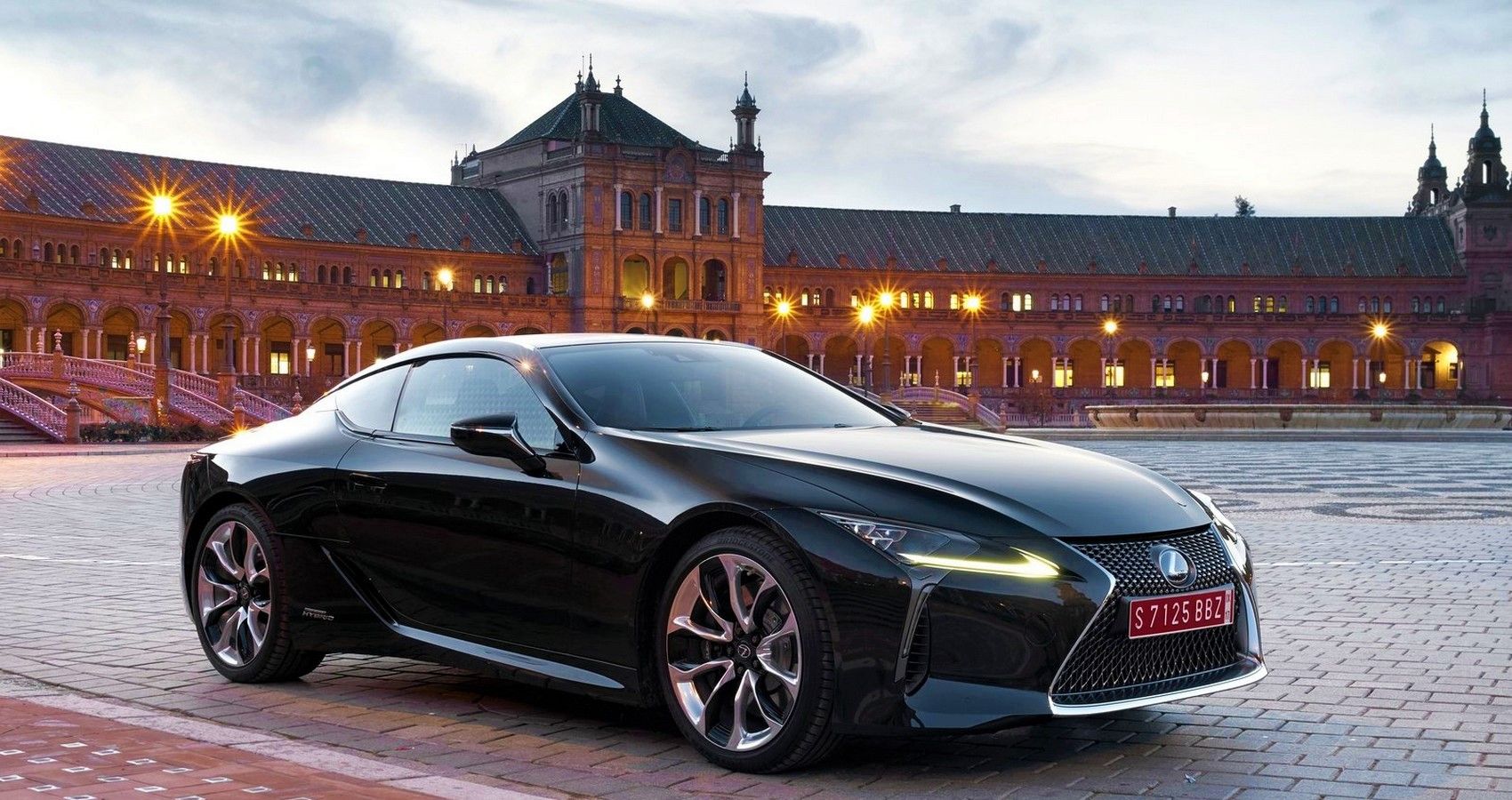
Are you curious about which popular cars are rocking a Continuously Variable Transmission (CVT)? These transmissions are becoming increasingly common due to their ability to optimize fuel efficiency and provide a smoother driving experience. We'll explore some of the popular models equipped with CVTs, digging into their benefits and what makes them a popular choice for many drivers seeking efficiency and a seamless ride. From compact cars to family sedans, the CVT is making its mark across various segments. Let's dive in and discover which vehicles are embracing this technology!
All About Continuously Variable Transmissions (CVTs)
A Continuously Variable Transmission, or CVT, is an automatic transmission that uses a system of belts and pulleys to provide avirtually infinitenumber of gear ratios. Unlike traditional automatic transmissions that have a fixed set of gears, a CVT can seamlessly adjust the gear ratio to match the engine's optimal power output for any given speed. This translates to better fuel economy and a smoother, more responsive driving experience. The significance of CVT technology lies in its ability to enhance vehicle efficiency without sacrificing performance. By keeping the engine in its most efficient operating range, CVTs can significantly reduce fuel consumption compared to traditional transmissions.
The history of CVTs dates back to the late 19th century, but they didn't become widely adopted in automobiles until the late 20th century. One of the early pioneers was DAF, a Dutch automaker, which introduced a CVT in its passenger cars in the 1950s. However, the technology remained relatively obscure until improvements in materials and control systems made it more reliable and cost-effective. In recent decades, Japanese automakers like Subaru and Nissan have been instrumental in popularizing CVTs, integrating them into a wide range of their vehicles. This wider adoption has led to further development and refinement of CVT technology, resulting in the sophisticated and efficient transmissions we see today.
What sets CVTs apart is their ability to provideseamless accelerationandoptimized engine performance. Traditional automatic transmissions shift between fixed gears, which can sometimes result in abrupt changes in engine RPM and a slight loss of momentum. In contrast, CVTs continuously adjust the gear ratio, eliminating the "shift shock" and keeping the engine in its sweet spot for power and efficiency. Expert opinions often highlight the benefits of CVTs in terms of fuel economy and driving comfort, particularly in stop-and-go traffic where the smooth, continuous acceleration can be a welcome relief. The technology truly shines in environments where efficiency and smooth operation are prioritized.
Benefits of CVTs for Users
CVTs significantly enhance the user experience by providing a smoother, more fuel-efficient driving experience. Theabsence of gear shiftscontributes to a seamless acceleration that many drivers find more pleasant than the sometimes-jerky transitions of traditional automatics. This is especially noticeable in city driving, where frequent changes in speed are common.
For example, consider a daily commute in a car equipped with a CVT. As the driver accelerates from a stop, the CVT smoothly adjusts the gear ratio to keep the engine in its most efficient RPM range, resulting in better fuel economy compared to a traditional automatic. Similarly, when cruising on the highway, the CVT can maintain a lower engine RPM, reducing fuel consumption and engine noise. Real-life examples like these demonstrate the practical benefits of CVT technology in everyday driving situations.
Compared to traditional automatic transmissions, CVTs offerimproved fuel efficiencyand asmoother driving experience. While traditional automatics have a fixed number of gears, CVTs can continuously adjust the gear ratio to optimize engine performance for any given speed. Compared to manual transmissions, CVTs offer the convenience of automatic operation, eliminating the need for the driver to manually shift gears. While some drivers may miss the engagement of a manual transmission, CVTs offer a compelling combination of efficiency and convenience. Data from the EPA (Environmental Protection Agency) often shows that vehicles equipped with CVTs achieve higher fuel economy ratings compared to similar models with traditional transmissions. This difference can translate to significant savings in fuel costs over the lifespan of the vehicle.
How to Drive a Car with a CVT
The learning curve is minimal for driving a vehicle with a CVT. Unlike manual transmissions, there's no need to worry about clutching or shifting gears. Still, mastering the nuances can improve your driving experience and potentially extend the life of the transmission.
1. Familiarize Yourself with the Drive Modes
Most cars with CVTs have the standardP(Park),R(Reverse),N(Neutral), andD(Drive) modes. Some models also include additional modes likeSport orEco. The Sportmode typically raises the engine RPM for quicker acceleration, while the Ecomode prioritizes fuel efficiency. Best practices involve understanding how these modes affect the vehicle's performance and choosing the appropriate mode for the driving conditions.
2. Smooth Acceleration
CVTs are designed forsmooth and continuous acceleration. Avoid sudden and aggressive acceleration, as this can put unnecessary strain on the transmission. Instead, gradually increase the throttle to allow the CVT to smoothly adjust the gear ratio. This technique not only improves fuel efficiency but also extends the lifespan of the CVT.
3. Understand Engine Braking
CVTs offer a different type of engine braking compared to traditional transmissions. When you release the accelerator pedal, the CVT will automatically adjust the gear ratio to provide some engine braking, but it may not be as pronounced as in a traditional automatic. To enhance engine braking, some vehicles with CVTs have paddle shifters or a manual mode that allows you to simulate downshifting. Experiment with these features to understand how they affect the vehicle's deceleration.
Tips Before Driving a Car Equipped with a CVT
Before you hop in and drive off, there are a few preparation guidelines that can help ensure a smooth and enjoyable driving experience.
First,familiarize yourself with the vehicle's owner's manual. This document contains valuable information about the specific CVT model and any recommended maintenance procedures. Pay close attention to the section on transmission fluid, as using the correct type and following the recommended service intervals is crucial for maintaining the CVT's performance and longevity.
Second,avoid towing heavy loadsif your vehicle is not specifically designed for towing. CVTs are generally not as robust as traditional transmissions when it comes to handling heavy loads, and towing beyond the vehicle's rated capacity can cause damage to the transmission. If you need to tow, be sure to check the vehicle's owner's manual for specific towing guidelines and weight restrictions.
Finally,avoid aggressive driving habitssuch as frequent hard acceleration and sudden braking. While CVTs are designed to provide smooth and efficient performance, they are not immune to wear and tear. Excessive stress on the transmission can shorten its lifespan and lead to costly repairs. By driving smoothly and avoiding aggressive maneuvers, you can help prolong the life of your CVT. Ignoring these tips can lead to premature wear and tear on the CVT, resulting in reduced performance and potentially expensive repairs.
Common Issues and Solutions
While CVTs offer numerous benefits, they are not without their potential issues. Understanding these common problems and knowing how to address them can help you maintain your vehicle and avoid costly repairs.
One common issue istransmission slippage, which occurs when the CVT fails to properly engage and the engine revs without a corresponding increase in speed. This can be caused by low or contaminated transmission fluid, worn belts or pulleys, or a malfunctioning control system. The solution typically involves checking the transmission fluid level and condition, and if necessary, replacing the fluid or repairing the CVT.
Another potential problem isunusual noises, such as whining or buzzing sounds coming from the transmission. These noises can be indicative of worn bearings, damaged gears, or other internal components. The solution may involve replacing the affected parts or, in some cases, replacing the entire transmission.
In addition,CVTs can sometimes exhibit a "rubber band" effect, where the engine revs up before the vehicle starts to accelerate. This is a normal characteristic of some CVTs, but it can be more pronounced in certain models or under certain driving conditions. While there is no specific solution for this issue, it can be minimized by driving smoothly and avoiding sudden acceleration.
Popular Cars With CVTs
Many popular cars incorporate CVT technology, offering drivers enhanced fuel efficiency and a smooth ride. Here are some notable examples: Nissan Altima:Known for its comfortable ride and fuel efficiency, the Altima's CVT contributes to its overall appeal.
Honda Civic: A long-standing favorite in the compact car segment, the Civic's CVT enhances its fuel economy without sacrificing performance.
Subaru Outback: A versatile wagon with standard all-wheel drive, the Outback's CVT provides smooth and efficient power delivery in various driving conditions.
Toyota Corolla: Another popular compact car, the Corolla's CVT contributes to its impressive fuel efficiency and comfortable ride.
Hyundai Elantra: The Elantra features a well-tuned CVT that enhances its fuel economy and provides a smooth driving experience.
Nissan Rogue: As a popular compact SUV, the Rogue relies on its CVT to deliver efficient performance while maintaining a smooth and comfortable ride.
Conclusion
CVTs offer a unique blend of efficiency and smoothness, making them a popular choice for many modern vehicles. By continuously adjusting the gear ratio to optimize engine performance, CVTs can improve fuel economy and provide a more comfortable driving experience. While they may have some potential issues, these can often be avoided with proper maintenance and careful driving habits. For drivers who prioritize fuel efficiency, a smooth ride, and the convenience of an automatic transmission, a car equipped with a CVT can be an excellent choice.
Post a Comment for "Popular Cars Equipped with a CVT Transmission"